
Slitting Machines Applications
Stable Tension Control Solutions for Roll-to-Roll Slitting Precision
Summary
Slitting machines require precise and stable tension control throughout the entire roll-to-roll process to achieve clean slit edges, consistent web tracking, and uniform rewind quality.
In film, paper, foil, and laminate slitting lines, roll diameter variation, speed changes, and material sensitivity can quickly lead to web wandering, wrinkling, edge damage, telescoping, or uneven winding tension. A magnetic powder brake combined with a tension controller and sensor feedback helps maintain smooth, repeatable braking torque on the unwinding side, allowing the system to respond effectively to continuous process changes.
This closed-loop approach is especially valuable in roll-to-roll slitting applications where even small tension deviations can affect slit width accuracy, edge stability, and finished roll quality. For engineers and OEM designers, stable tension control is a fundamental requirement for improving converting precision, reducing scrap, and ensuring reliable machine performance across a wide range of materials and operating speeds.
Applicable Equipment
Center slitting machines, duplex slitters, turret slitters, razor slitting machines, shear slitting systems, score slitting equipment, and other roll-to-roll slitting and rewinding lines for flexible materials.
Applicable Materials
Plastic film, PET film, BOPP film, paper, release liner, aluminum foil, copper foil, laminated materials, label stock, nonwoven materials, and other roll-to-roll web materials used in slitting processes.

Why Tension Control Is Critical in Slitting Machines
In slitting systems, web tension must remain stable from unwinding through the slitting zone to rewinding. Because roll diameter continuously changes and slit widths often vary across lanes, braking torque and web stability must be controlled in real time to maintain edge quality and rewind consistency.
Maintain Slit Edge Quality
Prevent Wrinkles and Web Wander
Stabilize Multi-Lane Rewinding
Improve Finished Roll Consistency
Common Tension-Related Problems in Slitting Lines
Slitting machines process sensitive web materials at varying widths and speeds, so tension instability can directly affect cutting precision, edge condition, and rewind quality across the entire roll-to-roll line.
Wrinkles Before or After the Slitting Section
If web tension is too low, uneven, or unstable, the material can wrinkle before entering the slitting knives or after separation, reducing slit quality and rewind uniformity.
Poor Slit Edge Quality
Inconsistent tension can cause web flutter or unstable knife engagement, resulting in rough edges, dust generation, burrs, or tearing depending on the material and slitting method.
Web Wandering and Tracking Instability
When the unwinding tension fluctuates, the web may shift laterally and reduce tracking stability, affecting slit width accuracy and downstream rewind alignment.
Uneven Rewind Hardness
Improper tension control across the process can create rolls that are too loose or too tight, leading to telescoping, starring, edge deformation, or poor handling in later processes.
Tension Drift During Roll Diameter Change
As the unwind roll becomes smaller, braking torque must decrease accordingly. Without compensation, actual web tension rises or falls and causes unstable slitting and winding results.
Integrated Tension Control Solutions for Slitting Machines
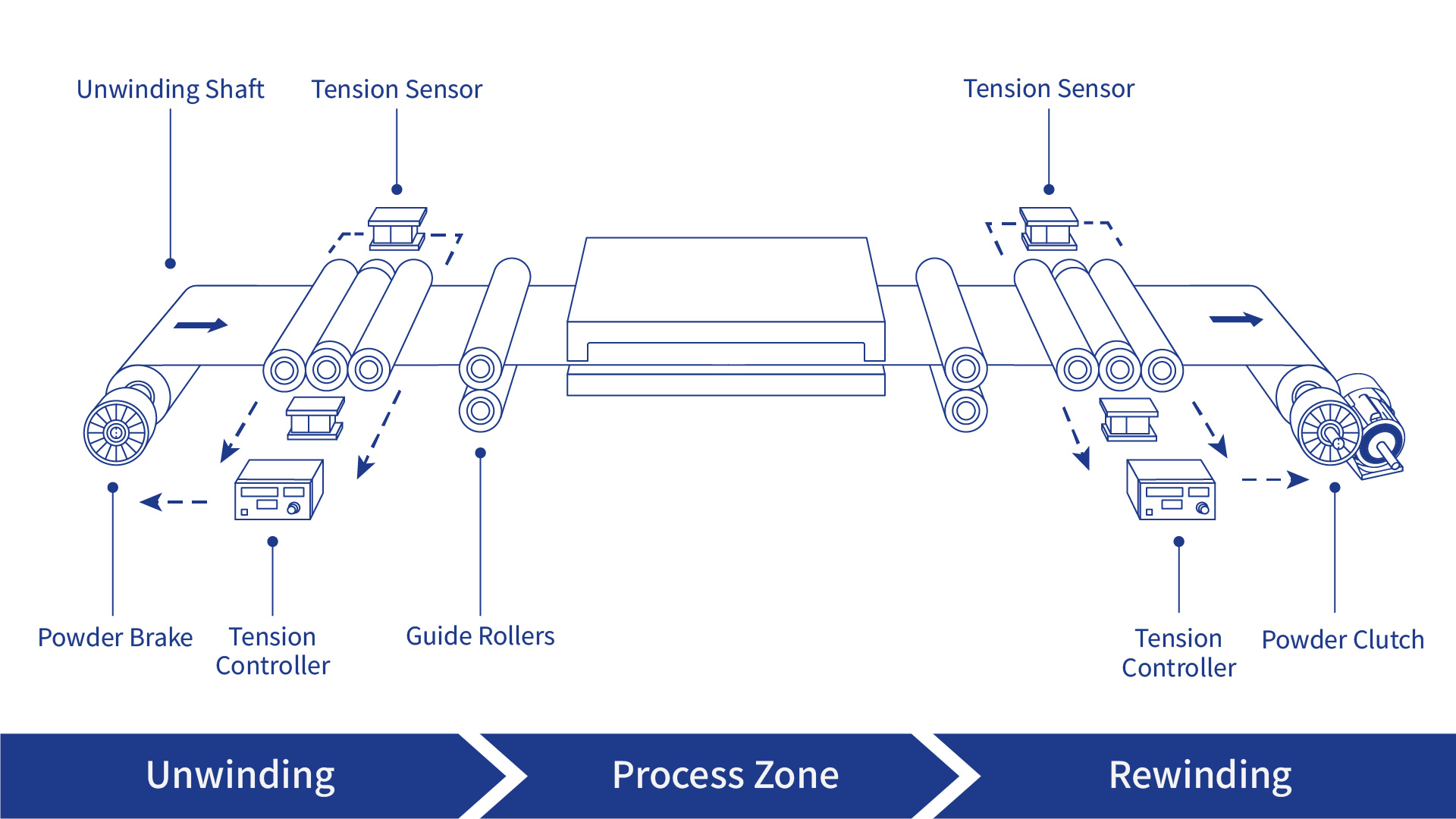
A typical slitting solution combines a magnetic powder brake, tension controller, tension sensor, and properly designed guide roller arrangement to create a responsive closed-loop tension control system. This architecture keeps unwinding tension stable as roll diameter and line speed change, helping the machine maintain smooth web transport, stable knife engagement, and consistent rewinding performance.
Ideal for
- Film slitting
- Paper slitting
- Foil slitting
- Label stock converting
- Laminate processing
- Other roll-to-roll applications that require precise slit quality and uniform rewinding
Core Value
- Stable unwinding tension
- Improved slit accuracy
- Better edge quality
- More consistent rewind rolls
- Reduced waste
- Higher converting reliability in roll-to-roll slitting operations
Closed-Loop Tension Control Architecture for Slitting Machines
System Components
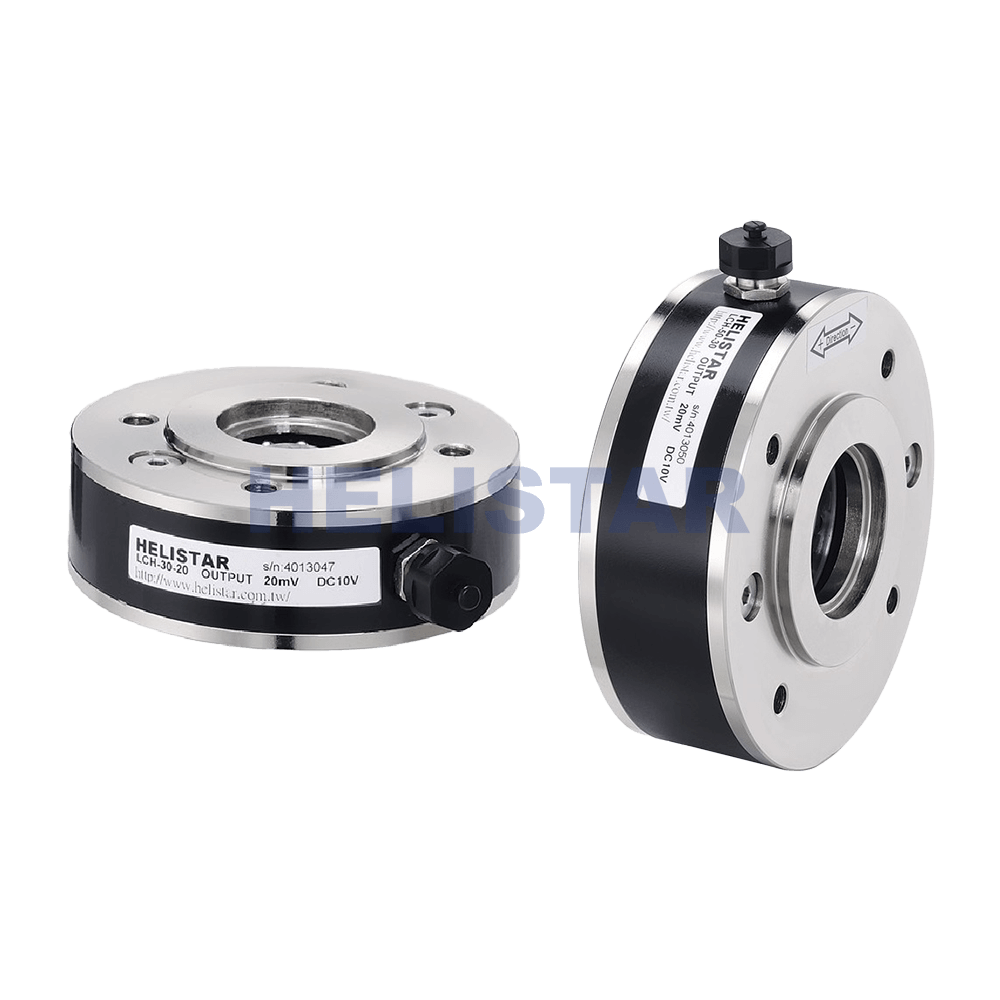
Magnetic powder brake & clutch
Torque generation
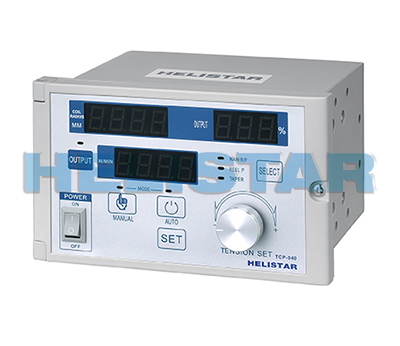
Tension controller
Signal processing and compensation
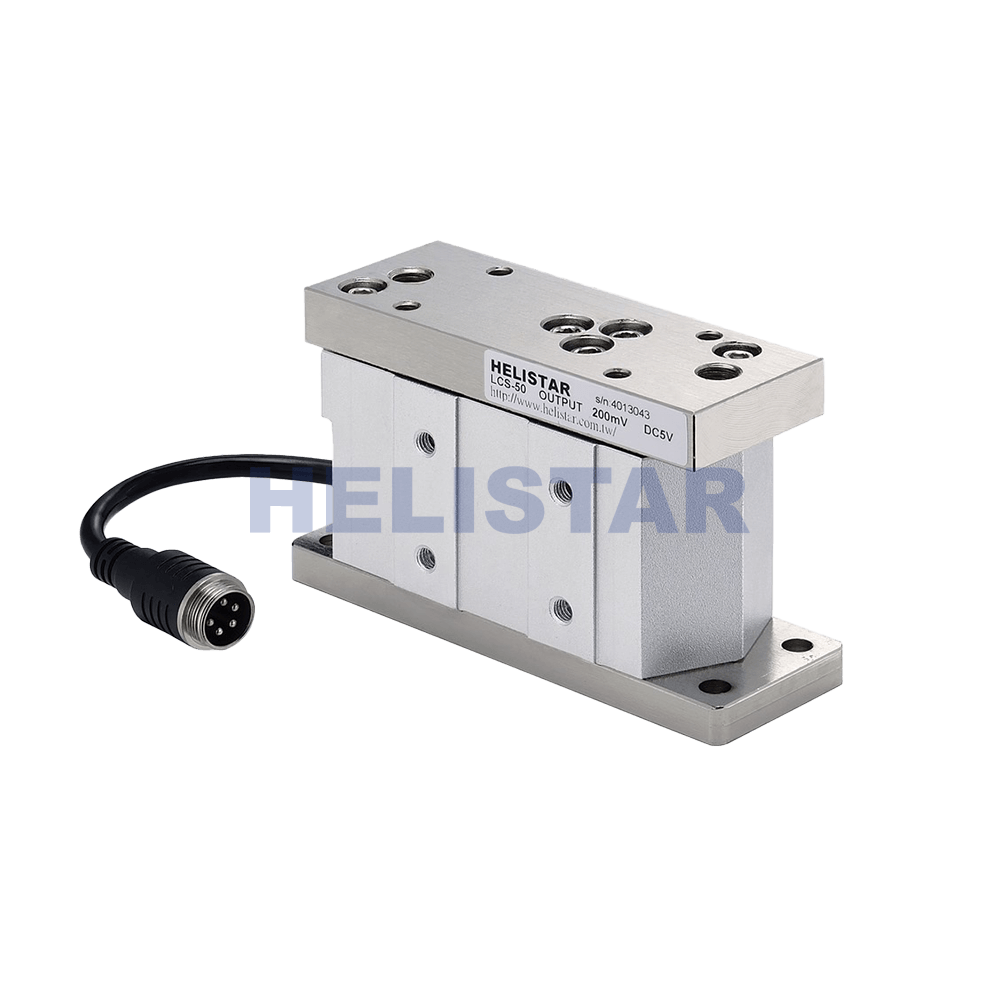
Tension sensor
Feedback measurement
Unwinding shaft and guide rollers
Web transport and path stabilization
Control Logic
Measured tension is continuously monitored and compared with the target setpoint.
The controller calculates deviation between actual tension and desired value in real time.
Compensation is applied based on roll diameter variation.
Additional compensation is applied for line speed changes and process dynamics.
Output current is adjusted accordingly to regulate braking torque.
A closed-loop control system is formed to maintain stable and consistent tension.
Why Magnetic Powder Brakes Are Suitable for Slitting Machines
Slitting machines require smooth torque output, fast response, and stable web handling across a wide operating range.
Magnetic powder brake systems are well suited to these requirements because they support continuous unwinding control without abrupt braking behavior, helping maintain precise tension conditions in roll-to-roll slitting lines.
Smooth and Repeatable Braking Torque
A magnetic powder brake provides stable and controllable torque output, helping the machine maintain consistent web tension and smoother transport through the slitting zone.
Accurate Compensation for Roll Diameter Change
Because braking torque can be adjusted continuously, the system can compensate for shrinking unwind diameter and keep actual tension closer to the target value.
Reliable Continuous Slip Operation
Slitting lines often require the unwind brake to operate continuously. Powder brake designs with appropriate heat dissipation are suitable for long-duration slip and stable production.
Improved Slit Quality and Rewind Structure
More stable tension improves slit edge condition, reduces wrinkles and web wandering, and supports more uniform rewind hardness across finished rolls.
Typical Installation Points
Unwinding station
Intermediate process zones
Rewinding station
Single or multi-zone configurations are selected based on machine speed and precision requirements.
Recommended Product Configuration
Final selection depends on torque demand, line speed, and material characteristics.




Engineering FAQ
Below are common engineering questions related to tension control, roll-to-roll web handling, and magnetic powder brake selection for slitting machines.
Stable tension control keeps the web flat and properly guided, which directly affects slit edge quality, tracking stability, and rewind consistency.
A magnetic powder brake provides smooth, adjustable braking torque and performs well in continuous slip operation, making it suitable for stable unwinding tension control.
Too much tension can stretch or damage the web, while insufficient tension can lead to wrinkles, web wandering, poor slit quality, and unstable rewinding.
The controller adjusts brake current based on feedback and compensation logic so that braking torque changes as the unwind roll diameter decreases.
Related Insights
Explore additional insights on manufacturing excellence and component design
Technical Summary
Slitting machines depend on stable tension control to maintain accurate web transport, clean slit edges, and consistent rewind quality in roll-to-roll production.
A magnetic powder brake combined with a controller and sensor feedback provides an effective closed-loop solution for compensating roll diameter change, line speed variation, and material sensitivity.
This system architecture helps reduce wrinkles, web wandering, slit instability, and poor rewind structure while improving converting precision and machine reliability.
For engineers and OEM designers, it is a practical and proven approach to high-performance slitting equipment.