Magnetic powder brakes are widely used in automation and roll-to-roll processing equipment because they provide smooth, highly stable torque control. Unlike mechanical brakes that rely on friction, magnetic powder brakes use magnetic particles to generate controllable resistance. This unique mechanism allows precise tension control, fast response, and excellent torque stability across a wide operating range.
This article explains the working principle, internal structure, and key advantages of magnetic powder brakes for engineers and equipment designers.
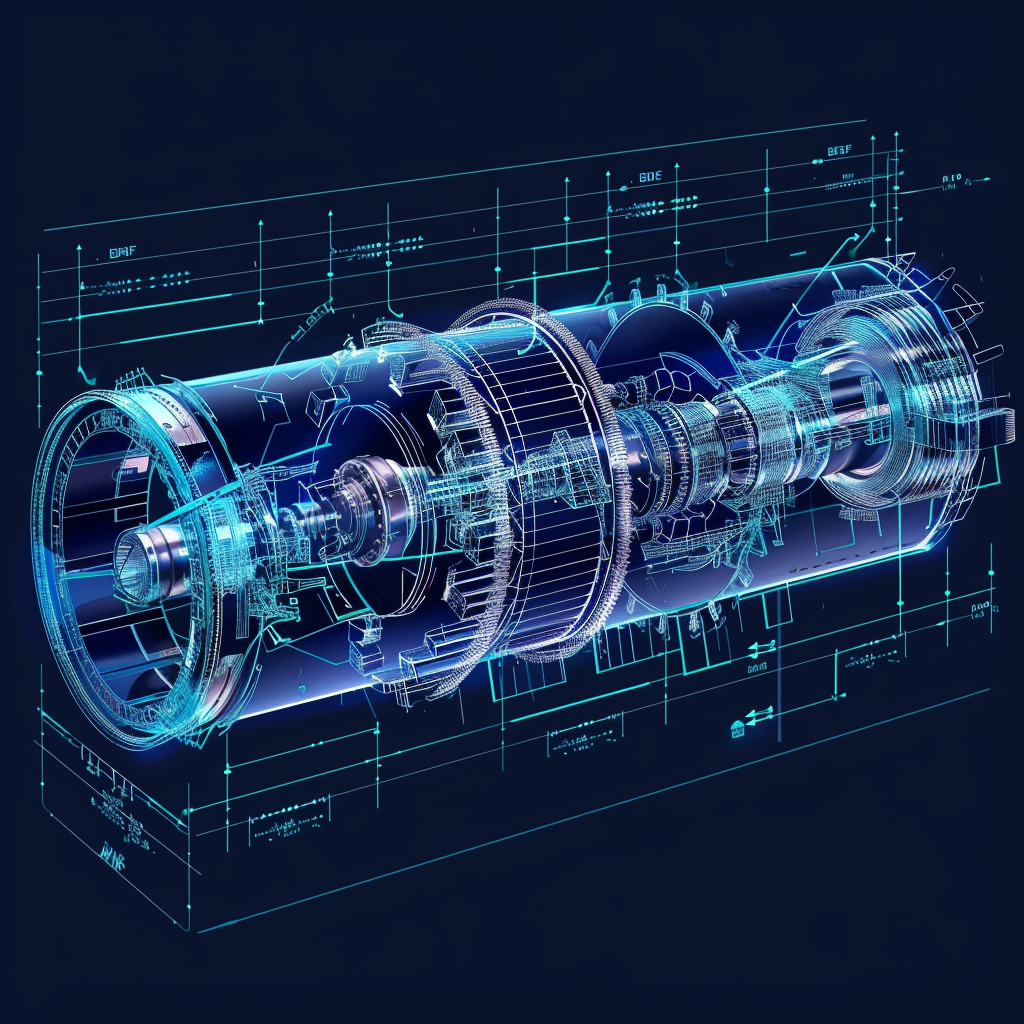
1. Internal Structure of a Magnetic Powder Brake
A magnetic powder brake consists of:
- Rotor (input side)
- Stator (output side with coil)
- Magnetic powder inside the gap
- Electromagnetic coil
- Housing with heat dissipation structure
When the coil is energized, magnetic flux forms a chain of magnetic particles that transmit torque from the rotor to the stator.
Suggested diagram:
- Cross-section showing rotor, stator, powder gap
- Annotate the magnetic flux path and powder chain formation
2. How Torque Is Generated
Torque in a magnetic powder brake is generated through magnetic adhesion between particles. Key behaviors:
- The more current applied → the higher the magnetic flux
- Higher flux increases powder bonding force
- Stronger bonding force transmits higher torque
- Torque is proportional to current, enabling precise control
This linear relationship is a major advantage over friction brakes.
3. Key Advantages
Precise and Stable Torque Output
Ideal for tension control in winding, rewinding, and slitting applications.
Smooth Braking Without Vibration
Since no mechanical contact is required, the system produces minimal chatter or shock.
Fast Response
The powder reacts rapidly to changes in current, enabling dynamic tension adjustments.
Excellent Heat Dissipation (Depending on Brake Design)
Models with improved cooling structure (e.g., HELISTAR POB / PHB series) allow stable operation during continuous braking.
4. Common Applications
- Printing machines
- Slitter and laminating equipment
- Bag-making machines
- Film winding and unwinding systems
- Cable and wire tension control
- Test benches and load simulation
5. Selecting a Magnetic Powder Brake
Engineers should consider:
- Required torque range
- Shaft type (hollow vs protruding)
- Duty cycle and heat dissipation requirements
- Speed range
- Installation orientation
For higher heat loads, choose brakes with enhanced cooling structures.
Conclusion
Magnetic powder brakes are an essential component in modern tension control and automation systems. Their ability to produce smooth, stable, and adjustable torque makes them the preferred choice in high-precision production environments.